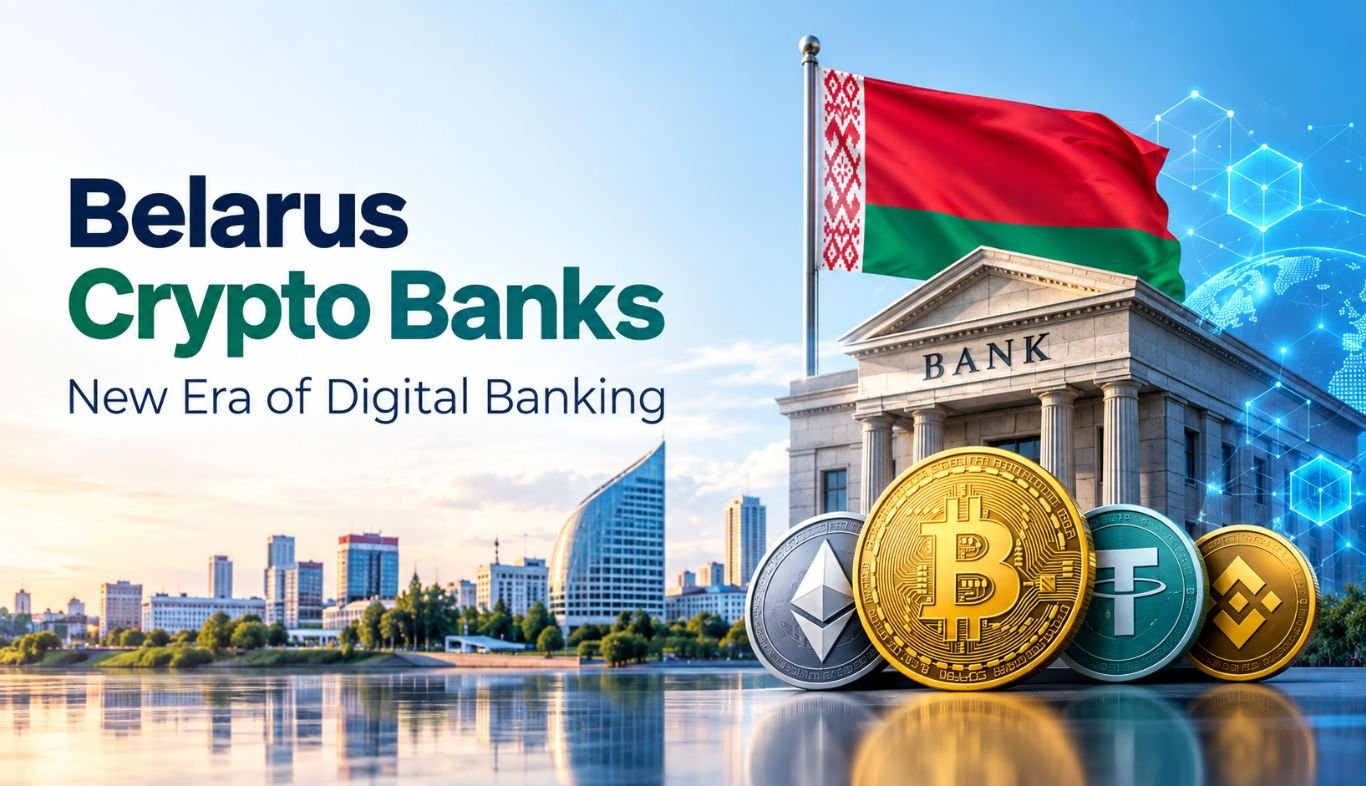
Belarus Crypto Banks: First Crypto Banks Registered in 2026
Belarus crypto banks have reached a significant milestone in the country’s digital finance sector with the registration of its first crypto banks. The development follows months of regulatory work to create a formal framework for institutions that combine cryptocurrency-related services with traditional banking and financial operations.
Belarus’s High-Tech Park (HTP) supervisory board has registered the first crypto banks following its decisions. Before they can begin operating, however, the institutions must obtain accreditation from the National Bank of Belarus and be included in its official crypto-bank registry.
The move could mark an important step in the convergence of traditional banking infrastructure and the cryptocurrency sector, while also providing a regulated framework for businesses and customers dealing with digital assets.
What Are Crypto Banks in Belarus?
Under Belarus’s new regulatory framework, a crypto bank is designed to combine activities involving digital tokens with banking, payment and other related financial services.
A January 2026 presidential decree established the legal foundation for crypto banks. Eligible institutions must be residents of the High-Tech Park and must also be included in the National Bank’s crypto-bank register. The framework is intended to bring cryptocurrency-related activities into a more structured financial environment.
This model differs from a conventional cryptocurrency exchange. Instead of operating only as a platform for buying and selling digital assets, a crypto bank can combine cryptocurrency functions with selected financial and banking services.
The framework therefore seeks to create a bridge between traditional finance and digital assets.
First Belarus Crypto Banks Move Toward Launch
The registration of the first crypto banks follows extensive preparations by the organizations seeking to enter the sector.
According to Belarus’s High-Tech Park, the applicants have assembled professional teams, developed their IT infrastructure and completed technical and legal audits. The organizations involved are described by HTP officials as established participants in the country’s technology and cryptocurrency sectors.
The registration process also demonstrates the dual regulatory structure created for Belarus crypto banks.
The High-Tech Park is responsible for the technology and digital-asset side of the framework, while the National Bank oversees relevant financial and banking requirements.
The first institutions can begin operations only after receiving National Bank accreditation and being added to the regulator’s crypto-bank registry.
How Belarus’s Crypto Banking Framework Works
Belarus introduced the legal foundation for crypto banks through Presidential Decree No. 19, signed in January 2026. The provisions establishing the operating framework came into effect in July 2026.
The framework requires crypto banks to satisfy requirements associated with financial institutions while also complying with rules established for High-Tech Park residents.
The National Bank subsequently established procedures for maintaining its crypto-bank registry. Separate regulatory provisions also address prudential requirements applicable to crypto banks.
This creates a regulatory model in which crypto banks are subject to oversight from both the technology-focused High-Tech Park framework and the country’s central banking authority.
Crypto and Traditional Banking Under One Institution
One of the most notable features of Belarus’s crypto-bank model is its attempt to integrate digital assets directly into a financial institution.
When the framework was announced, National Bank officials described crypto banks as institutions capable of combining functions associated with traditional banks and cryptocurrency exchanges. The regulatory framework also provides for cryptocurrency-related assets and transactions to be handled within the institution’s financial infrastructure.
This approach could potentially make crypto-related financial services more accessible to businesses and individuals while bringing those activities into a supervised environment.
Rather than treating cryptocurrency as an entirely separate financial ecosystem, Belarus is attempting to create a regulated point of connection between the two sectors.
Belarus Expands Crypto Use in International Trade
The development of crypto banks is also connected to Belarus’s broader efforts to expand the practical use of digital tokens.
In June 2026, the Belarusian government introduced rules allowing eligible legal entities involved in foreign trade to use digital tokens for certain international settlements conducted through cryptocurrency banks. The framework covers activities including imports and exports of goods and services and certain other transactions.
This could give crypto banks a role beyond retail cryptocurrency transactions.
For businesses operating internationally, regulated crypto-financial infrastructure could potentially provide another mechanism for managing digital-asset transactions alongside conventional financial services.
Which Cryptocurrencies Can Belarus Crypto Banks Support?
Belarus has also established rules concerning the digital tokens that crypto banks can work with.
According to Belarusian reporting on the regulatory framework, crypto banks may work with 24 types of tokens, including major assets such as Bitcoin and Ethereum. Rules also establish mechanisms for determining daily token exchange rates using market data from major cryptocurrency exchanges.
The use of defined valuation mechanisms is important because cryptocurrency prices can vary significantly across exchanges and trading venues.
A standardized approach to valuation can help financial institutions establish consistent accounting and transaction procedures.
Latest: Tokenized Stocks: How Wall Street Is Moving Toward Blockchain
Why Belarus Is Developing Crypto Banks
Several objectives appear to be behind Belarus’s crypto-banking initiative.
1. Connecting Traditional Finance With Cryptocurrency
Crypto banks are intended to bring cryptocurrency services closer to the conventional financial system. This could provide businesses and customers with a regulated institutional environment for digital-asset activities.
2. Supporting the Digital Economy
Belarus has already established the High-Tech Park as an important technology and digital-business environment. The crypto-bank framework extends this broader digital-economy strategy into financial services.
3. Attracting Investment
Belarusian officials have linked the creation of crypto banks with the potential to attract domestic and international investment into the country’s financial and technology sectors.
4. Creating a Formal Regulatory Structure
A regulated crypto-banking framework can provide clearer requirements for institutions operating at the intersection of cryptocurrency and financial services.
For companies considering crypto-related operations, regulatory clarity can be an important factor when evaluating potential markets.
What Does the Development Mean for the Crypto Industry?
The launch of Belarus crypto banks comes at a time when financial institutions in different jurisdictions are exploring ways to integrate digital assets into regulated financial systems.
The Belarus model is notable because it does not simply create another cryptocurrency exchange category. Instead, it attempts to combine digital-token operations with banking and payment services under a dual regulatory structure.
For the broader cryptocurrency industry, the development illustrates one possible approach to institutional crypto adoption: bringing digital assets into regulated financial infrastructure rather than keeping them entirely separate from traditional finance.
However, the long-term impact will depend on how the first crypto banks operate, how customers use their services, and how Belarusian regulators develop the framework over time.
Challenges and Considerations
The establishment of crypto banks does not eliminate the challenges associated with digital assets.
Crypto banks will still need to operate within financial, technical and regulatory requirements. They will also face the underlying challenges associated with cryptocurrency markets, including price volatility, cybersecurity, operational risks and compliance obligations.
The dual-regulation model could provide additional oversight, but it also means that crypto banks must navigate requirements from both the National Bank and the High-Tech Park.
As the first institutions move toward actual operations, their performance will provide an early indication of how effectively this regulatory structure works in practice.
The Future of Crypto Banking in Belarus
The registration of the first crypto banks represents a new phase in Belarus’s digital-finance strategy.
The country has moved from establishing a legal concept for crypto banks to creating an operational regulatory framework, registering the first institutions and preparing them for National Bank accreditation.
If the model develops successfully, Belarus could become an interesting case study in how governments attempt to integrate cryptocurrency into regulated financial infrastructure.
For cryptocurrency businesses, fintech companies and investors, the next stage will be particularly important: seeing how the first crypto banks launch, which services they provide and how customers and businesses respond.
Conclusion
The registration of the first Belarus crypto banks marks a significant development in the country’s cryptocurrency and financial-services landscape.
With the High-Tech Park providing the digital-asset framework and the National Bank responsible for financial oversight and accreditation, Belarus has created a distinctive model for combining cryptocurrency with traditional financial services.
The immediate milestone is the registration of the first institutions. The bigger test will be their transition into operational crypto banks and the evolution of the regulatory framework as real-world activity begins.
For the global crypto industry, Belarus offers another example of the growing effort to connect digital assets, banking, and regulated financial infrastructure.





Leave A Comment